A well pump lifts water out of the ground and builds the pressure your taps run on. In most homes it is a submersible pump hanging inside the well casing, under the water; on shallow wells it is often a jet pump in the house, beside the pressure tank. Either way it works in a chain: pump, drop pipe and check valves, a pitless adapter through the side of the casing, a pressure tank, and a switch that starts and stops the pump. This guide explains each part and points to the page that goes deep on each. Past reading the gauge, checking the breaker and copying the labels, the makers keep pump work for qualified people.
General information, not professional advice. Your pump and tank makers’ manuals and a licensed well or pump contractor decide what’s safe for your system; your state or county decides what needs a permit or a licence.
No water right now? Start with well pump troubleshooting, symptom by symptom. If the pump or its control box has been under flood water, leave it off: EPA says “DO NOT TURN ON THE PUMP” until the wiring has been checked by a qualified electrician, well contractor or pump contractor (EPA 816-F-05-021, read 11 November 2026).
Start with the whole system
EPA is plain about who is in charge: “Private well owners are responsible for delivering safe drinking water to their households” (EPA, Private Drinking Water Wells, read 11 November 2026). Water leaves the well sideways below the frost line and fills a pressure tank, squeezing a cushion of air. The switch starts the pump when pressure falls to the cut-in and stops it at the cut-out; between starts, the air pushes water to the taps. How a private well system works follows the water from the bottom of the well to the tap, with a table of what the makers leave to owners and what they keep for a professional. Read it first. The tank and switch have their own guides in Pressure Tanks and Switches.
Which pump do you have?
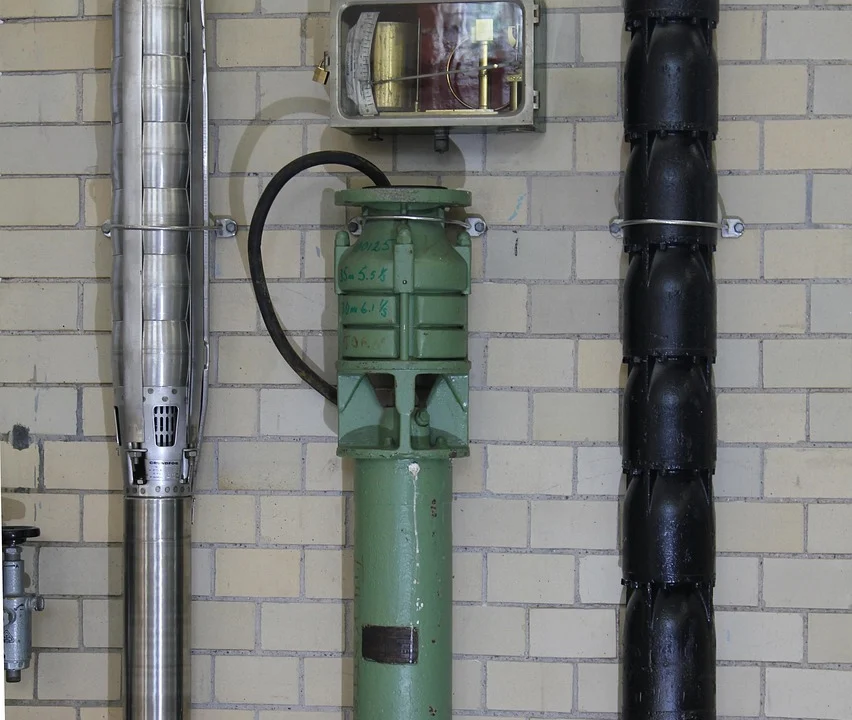
EPA calls jet pumps “the most commonly used pumps for shallow wells (depth of 25 feet or less)” and submersibles “the most commonly used pumps for deep private wells” (EPA, Learn About Private Water Wells, updated 14 September 2026, read 11 November 2026). Goulds limits its shallow-well jets to a suction lift of 25 feet, friction included, measured to the water while the pump runs, not to the bottom of the well (IM102 Rev 13, p. 3, read 11 November 2026). Submersible vs jet pumps sets shallow, deep, convertible and submersible side by side and shows how to recognise yours by looking.
A newer option swaps the pressure switch for an electronic drive that speeds the pump up and down to hold one pressure. It means steadier pressure, not more water: Franklin Electric’s drive manual says the pump’s maximum output is about the same as with a switch (SubDrive Utility 226115120 Rev. 003, p. 9, read 11 November 2026). It also changes the tank’s precharge rule: the switch-system figure, 2 psi below cut-in (Goulds IM096 Rev 14, p. 3; Amtrol 9015-939 (04/18), p. 4), gives way to the drive maker’s own, such as Franklin’s 70% of the target pressure (226115120, p. 15). Constant-pressure well pumps explains the difference, and how to spot products sold as “constant pressure” that are not variable-speed at all.
How a pump is sized
A pump is chosen on two numbers: the flow the household needs, in gallons per minute, and the total dynamic head it pushes against. Head is the pumping water level, plus the climb from well head to tank, plus friction in the pipe, plus the cut-out pressure in feet (Goulds: feet of head = 2.31 × psi, TTECHWP R7, printed p. 20-21, read 11 November 2026). Our well pump size calculator works both out from your own figures. It never names a pump or a horsepower; a licensed pump installer reads the numbers off a maker’s curve and sizes the pump.
How long a pump lasts
No pump maker we read prints a life expectancy in years. The “8 to 15 years” seen on many sites is commonly quoted, not a standard. What makers put in writing is a warranty, and it is short: on Goulds’ standard-duty 4-inch submersibles, 36 months from installation or 42 from manufacture, whichever is shorter (IM096 Rev 14, p. 15); on Franklin Electric’s standard terms, 1 year from installation (M1571 (08-19), section C, p. 2). Both read 11 November 2026. The makers are clearer on what wears a pump out. Frequent starts top the list: Franklin asks for at least one minute of running per start and, for single-phase motors of 1 to 5.5 HP, no more than 100 starts in 24 hours (AIM Manual M1311, 2026 edition, printed p. 4, read 11 November 2026). How long a well pump lasts, and signs it’s failing covers the rest, and why most “failing pump” signs also have causes outside the pump.
The parts around the pump
The control box
A 3-wire submersible needs a control box on the wall for its starting capacitors and relay; a 2-wire pump carries those parts inside the motor (Franklin AIM M1311, printed p. 11-12). In Goulds’ wiring instructions, a 3-wire motor’s leads go to the control box and a 2-wire motor’s go straight to the pressure switch (IM096 Rev 14, p. 5), so you can often tell which you have without opening anything. Nothing inside the box is owner work: Franklin warns that “Some controls can hold lethal voltage after power has been disconnected” (AIM M1311, printed p. 3). All read 11 November 2026. The control box, capacitor and wiring, explained covers what an installer tests and why.
Check valves, foot valves and the pitless adapter
A check valve stops water running back down the well when the pump stops; a foot valve keeps a jet pump’s suction pipe full so it stays primed; a pitless adapter is, in EPA’s words, “a connector that allows the pipe carrying water to the surface to remain below the frost line” (EPA, Learn About Private Water Wells, read 11 November 2026). Check valves, foot valves and pitless adapters sets out where each maker puts them, and what you can check from the house.
When a pump has to come out
Many reasons a pump seems dead sit at the surface: Franklin’s troubleshooting table lists a tripped breaker, wrong voltage, a damaged pressure switch, a control box fault and damaged wiring ahead of a bound pump (AIM M1311, printed p. 26, read 11 November 2026). So a good installer tests before pulling anything. Replacing a well pump explains the job start to finish, from those tests to the paperwork. No pump maker we read gives owners the steps; Goulds: “All electrical work must be performed by a qualified technician” (IM096 Rev 14, p. 1, read 11 November 2026).
The law is a separate question. Ohio counts “servicing or replacing pumps or pumping equipment” as a repair that needs no permit (Ohio Adm. Code 3701-28-01(BBBB), effective 1 January 2020, read 11 November 2026); Wisconsin’s DNR says “Only those persons holding a current pump installer license from the DNR may install and replace pumps” (PUB-DG-002, June 2025, read 11 November 2026). Can I replace my own well pump? gives every state we have read, with section and read date, beside the makers’ line. A law that doesn’t require a licence doesn’t make the job an owner’s job.
Pulling a pump opens the well, and EPA lists replacing or repairing “any part of your well system” among the times to test your water (EPA, Protect Your Home’s Water, read 11 November 2026). Your state lab or county health department can tell you how.
Your next step
- Find the pump’s breaker and any separate disconnect. Franklin says more than one disconnect may be needed (AIM M1311, PDF p. 5, read 11 November 2026).
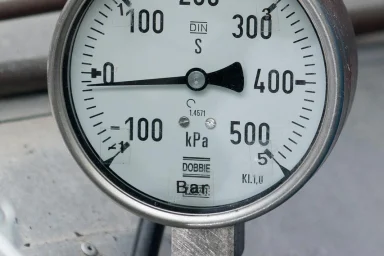
- Write down what you can see without opening anything: the labels on the control box, switch and tank, whether wires from the well go to a box or straight to the switch, and the gauge at cut-in and cut-out.
- Ask any installer what was tested, the amp and insulation readings, whether the check valve and tank were checked, and for a written quote line by line.
- Don’t wait on a breaker that trips again, a pump that has been under water, or an open or damaged cap or casing: leave the power off and call.
Sources checked on 11 November 2026: EPA’s private well pages and flood sheet 816-F-05-021; Goulds IM096 Rev 14, IM102 Rev 13 and TTECHWP R7; Franklin Electric AIM Manual M1311 (2026 edition), SubDrive Utility 226115120 Rev. 003 and M1571 (08-19); Amtrol 9015-939 (04/18); Ohio Adm. Code 3701-28-01 in official text; Wisconsin DNR PUB-DG-002. Makers’ documents describe their own products; your pump’s manual governs your pump.