A private well needs little routine work, but it needs a rhythm and a record. A licensed or certified well professional checks the whole system on a schedule (every year, say NGWA and CDC; every 5 years, says the Water Systems Council). Between visits, the owner looks at the cap, the casing and the ground, reads the pressure gauge, times one pump cycle and writes it down. Buying a house with a well adds the seller’s paperwork, the disclosure, an inspection condition and the lender’s well rules.
General information, not professional advice. Your pump and tank makers’ manuals and a licensed well or pump contractor decide what’s safe for your system; your state or county decides what needs a permit or a licence.
Private wells “are not regulated by the Federal Government under the Safe Drinking Water Act nor by most state governments and laws” (EPA, Private Drinking Water Wells, read 11 November 2026). The schedules below are advice, not law.
Where to start
- You own the well: start with the yearly well maintenance checklist.
- You are buying: start with the checklist for buying a house with a well.
- The cap or casing looks wrong: read the cap and casing section below.
- The water or pressure has already gone wrong: go to well pump troubleshooting, symptom by symptom.
The yearly rhythm
You check, looking only
- The wellhead. Casing at least 12 inches above ground; cap and seals in good condition and securely attached (NGWA, Annual Inspection, read 11 November 2026, association guidance). Don’t lift the cap: NGWA lists opening the well as a reason to call a professional.
- The ground. Sloping away from the well (EPA; NGWA), with chemicals kept away.
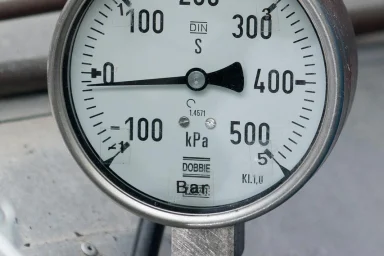
- The gauge and one timed cycle. Note cut-in (pump on) and cut-out (pump off), then, with every tap closed, time the climb between them. The Water Systems Council expects 1 to 2 minutes and says under 45 seconds or over 2 minutes 15 seconds should be looked into by a licensed well contractor; constant-pressure systems are a special case (WSC Guide to Evaluating Water Wells, September 2021, p. 10, read 11 November 2026, association guidance).
- The tank and pipes. Rust, drips, dampness. Flexcon says a tank with visible leaking, corrosion or rust must be replaced immediately (Flexcon Steel Well Tanks IOM Rev. 9.21, p. 2 and p. 3, read 11 November 2026).
- The record. Date, both readings, the timed cycle, what you saw.
Nothing here opens the well, the switch cover or the control box. The tank’s air charge is where makers part ways: Goulds lets owners check it, power off and tank drained, but sends any adjustment to a qualified professional (Goulds IM251R01, p. 5); Amtrol reserves checking for qualified professionals (Amtrol 9015-939 (04/18), p. 2 and 4); both read 11 November 2026. The checklist page sets them side by side.
The professional checkup
NGWA says wells “should be evaluated annually by a licensed or certified water well systems professional”: a flow test, the motor’s amp load, grounding and line voltage, the tank and switch, a water test and a written report (NGWA, Annual Inspection). CDC also says “Get a well checkup every year” (CDC, Well Water Safety, read 11 November 2026). WSC suggests every 5 years, and right away for a well with no inspection record and an unknown age (WSC, Well Maintenance, p. 1, read 11 November 2026).
A 30-minute hose test is, in WSC’s words, “a snapshot of the well, not a long-range test”; a yield test says more (WSC inspector guide, p. 13). The electrical readings are taken on live 115 or 230 volt circuits, and Goulds says “All electrical work must be performed by a qualified technician” (Goulds IM096 Rev 14, p. 1, read 11 November 2026): the inspector’s job, not the owner’s. Our guide to what a well inspection checks and what it costs explains each reading. Three county health departments publish a well-only evaluation at $143 to $525, and a fourth charges $200 to review a private evaluator’s report (fee schedules read 11 November 2026).
This site doesn’t cover water testing: test after a repair or a flood, as EPA’s Protect Your Home’s Water says, and ask your state or county health department.
The cap and the casing
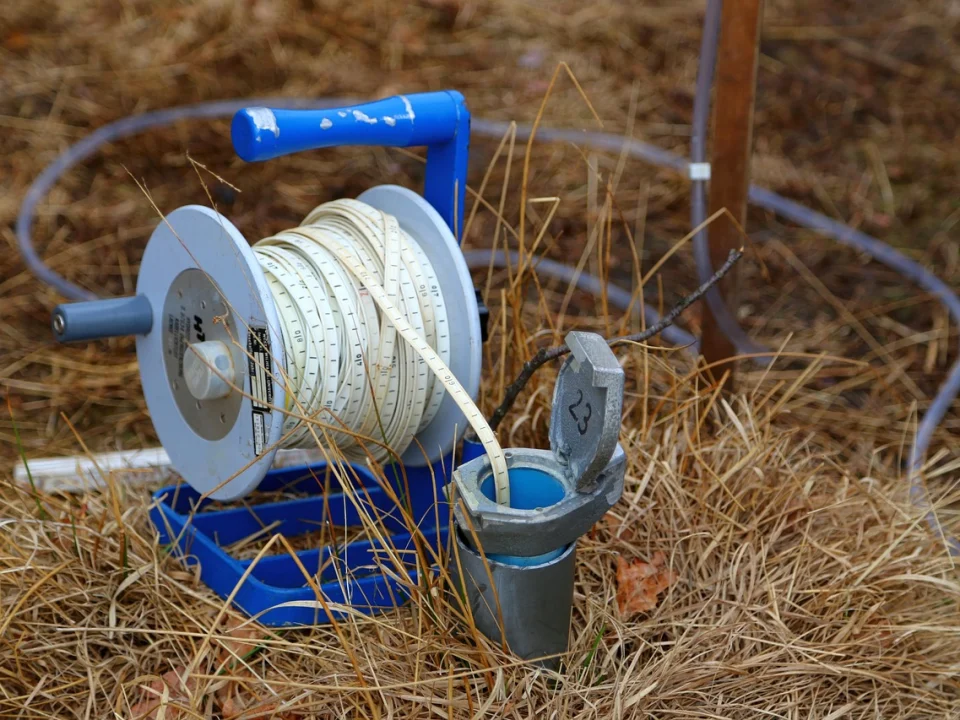
The casing is the pipe that lines the top of a drilled or driven well and sticks up out of the ground; the cap closes it, keeping out insects, animals and runoff while a screened vent lets the well breathe. The associations say 12 inches above ground; your state’s figure is the one that binds you:
| State | Casing above ground, new wells | Section, read 11 Nov 2026 |
|---|---|---|
| North Carolina | 12 in | 15A NCAC 02C .0107(d)(5) |
| Ohio | 12 in; pre-2020 wells with 8 in need not be extended | OAC 3701-28-10(T)(4), effective 1 Jan 2020; 3701-28-02(G) |
| Minnesota | 12 in; no pits | Minn. R. 4725.2250 subp. 11 |
| Virginia | 12 in | 12VAC5-630-410 C 6 |
| Washington | 6 in; no pits | WAC 173-160-291(1), effective 19 Jan 2009 |
| Other states | Not confirmed: ask your state well program or county health department | — |
The cap. Looking, clearing debris off the outside of a vent screen and measuring the height are owner checks. Replacing a cap is not: on many wells the pump’s power cable runs out through the cap, and on a steel casing the cap can be part of the pump’s grounding, so it is work for a qualified electrician or licensed pump installer. See well cap types, height and replacement.
The casing. EPA asks owners to look for “Cracked, corroded or damaged well casing”, and says “Do not cut off the well casing below the land surface” (EPA, Protect Your Home’s Water, read 11 November 2026). Repairs are well contractor work, and the law can turn on where the damage is: in Ohio, extending casing that ends at or above ground is a repair with no permit, while repairing or replacing casing below ground is an alteration needing a board of health permit (OAC 3701-28-01(A)(5) and (BBBB); 3701-28-03(A); read 11 November 2026). See well casing materials, height, damage and repair.
Buying a house with a well
Well inspections “are not typically included as part of a regular home inspection” (WSC inspector guide, p. 4). Seller disclosure differs by state, from Minnesota’s Well Disclosure Certificate at closing (Minn. Stat. 103I.235) to Virginia’s buyer-beware statement with no well item (Va. Code 55.1-703); both read 11 November 2026. HUD requires an existing well on an FHA loan to deliver at least 3 gallons per minute continuously, and refuses FHA insurance for homes served by sand-point (driven) or artesian wells (HUD Handbook 4000.1, last revised 12 August 2026, pp. 188-189, read 11 November 2026). If the well is shared, read our outline of what a shared well agreement covers and have a real estate attorney in your state review the document. An unused well on the land can become your obligation: see abandoned and old wells.
Where the owner’s part stops
- Never add air to a tank that has lost it, shows rust or whose cycle time has dropped: re-pressurising “could result in rupture or explosion” (Amtrol 9015-939 (04/18), p. 2 and p. 4, read 11 November 2026). That tank is a replacement, not a refill.
- Some systems have more than one disconnect, and some controls hold a lethal charge after the power is off (Franklin AIM Manual M1311, 2026 edition, PDF p. 5, read 11 November 2026). Wiring, control boxes and motors go to a qualified electrician or licensed pump installer.
- Never enter a well pit: “Gases and vapors can build up in well pits” (CDC, read 11 November 2026).
- After a flood, leave the pump off until a qualified electrician, well contractor or pump contractor has checked the wiring (EPA 816-F-05-021, read 11 November 2026).
Who may do well work is a state question: see who may replace a well pump, by state and well permits and setbacks. Check any contractor on your state’s public licence lookup; we don’t recommend contractors or inspectors.
The next step
- Today: look at the wellhead, read the gauge at cut-in and cut-out, time one cycle with every tap closed, and write it down with the date.
- This month: find your well log (state well-record database or county health department) and the pump and tank labels, and book a checkup if there is no record of one.
- What can’t wait: a breaker that trips again or a burning smell, a flooded pump, a tank that leaks, rusts or has lost its air, a missing cap or an open well (keep children and pets away). Call a licensed pump installer or well contractor.
Sources checked on 11 November 2026: EPA, CDC, NGWA and Water Systems Council pages; Amtrol, Goulds, Flexcon and Franklin Electric documents; the state codes in the table; Minn. Stat. 103I.235; Va. Code 55.1-703; HUD Handbook 4000.1; county fee schedules; each as cited above and on the pages linked here.