A private well comes with paperwork. A shared well needs a recorded agreement on who pays and who decides, and your lender or county may require one. An old, unused well must be sealed under your state’s rules on who, how and when. And for well work you can’t pay for, USDA has two 1% loan programs for rural homeowners. Each has its own guide below, with the rule, section and date behind every line.
General information, not professional advice. Your pump and tank makers’ manuals and a licensed well or pump contractor decide what’s safe for your system; your state or county decides what needs a permit or a licence.
Nor is it legal or financial advice. The starting point for all three: EPA says the quality and safety of water from private domestic wells “are not regulated by the Federal Government under the Safe Drinking Water Act nor by most state governments and laws” (EPA, Private Drinking Water Wells, read 11 November 2026). So the owners carry the job, and these papers are how it is shared, finished or paid for.
Shared wells: the agreement
When homes share one well, the arrangement is mostly left to the neighbours. A recorded agreement says who may take water and for what, where the easements run, how power, repairs and replacement are split, who decides on spending, and what happens in an emergency, a sale or a dispute. A University of Arizona extension guide says a buyer’s right to the water comes from the recorded wording, and no state agency checks it (AZ1810, February 2020, p. 3).
Three lines decide how many homes can share one well:
- The federal line. A system becomes a public water system once it “has at least fifteen service connections or regularly serves an average of at least twenty-five individuals daily at least 60 days out of the year” (40 CFR 141.2, eCFR as of 9 November 2026). Count people as well as houses.
- FHA’s line. For an FHA-insured mortgage, a shared well may serve no more than four living units or properties, must give each existing home at least 3 gallons per minute over four hours (or a storage alternative), needs a shut-off valve on each house’s line, and the agreement must contain 22 listed provisions and be recorded (HUD Handbook 4000.1, issued 12 August 2026, II.A.3.a.ii(N)(3), pp. 189-192).
- Your county’s line, which can be lower. Clallam County, Washington, allows two residential connections; Ventura County, California, four parcels; Maricopa County, Arizona, 15 lots or houses. Elsewhere not confirmed: ask your health department before adding a connection.
Our guide to shared well agreements outlines the twelve subjects an agreement covers, sets HUD’s list beside the Water Systems Council’s sample and Clallam County’s form, and ends with checklists for buyers and for neighbours already sharing. It is an outline and a checklist, never a template: the Arizona extension guide says there is no standard format that works for every shared well. Have a real estate attorney in your state draft or review yours.
When a shared well stops, acting in an emergency means calling a licensed pump installer or well contractor, not opening the well or wiring yourself: Goulds says “All electrical work must be performed by a qualified technician” (IM096 Rev 14, p. 1, read 11 November 2026).
Old and abandoned wells
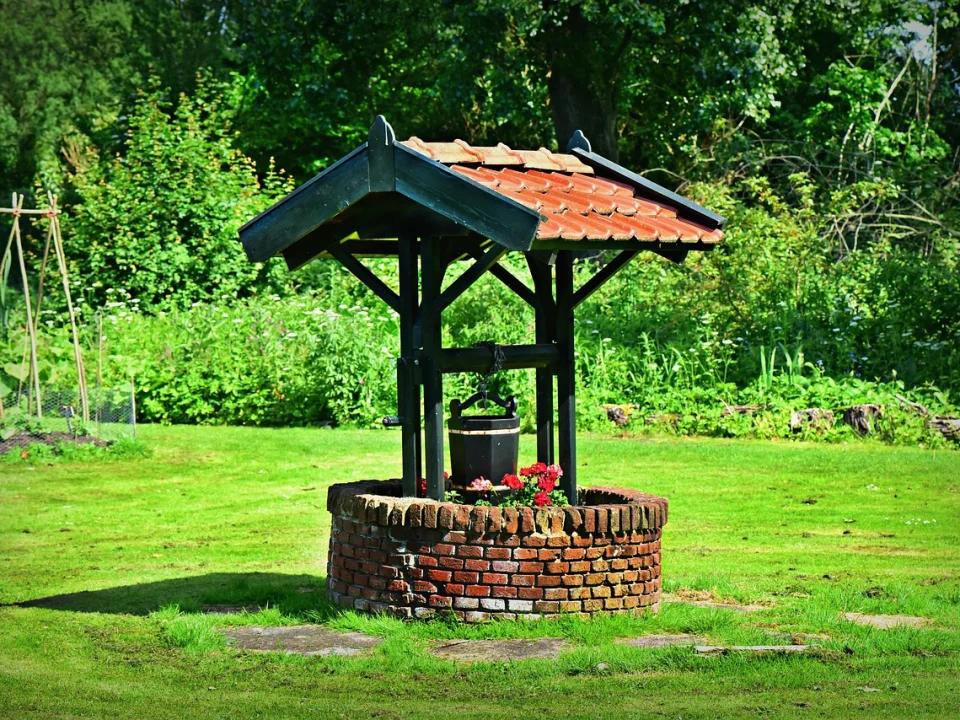
An abandoned well is one nobody uses any more: an old dug well, a well left behind for town water, a dry hole, a replaced well. CDC’s advice is short: “If you are no longer using your well, you must retire it by filling and properly sealing it” (CDC, Well Water Safety, page dated 4 June 2024, read 11 November 2026). An open well can carry surface water straight down to the aquifer, and old dug wells are “usually 3 to 5 feet” wide, a fall hazard for people and animals (NGWA, Old, Unused Wells, association guidance, read 11 November 2026).
What you can do now
- Keep people and animals away from an open or weak cover, and don’t stand on old boards, slabs or lids over a pit or dug well.
- Don’t go into a well pit or lean into a well. CDC: “Do not enter the well pit” (How to Disinfect Wells After an Emergency, page dated 29 May 2025).
- Put nothing down it: “Do not dispose of wastes in dry wells or in abandoned wells” (EPA, Protect Your Home’s Water, updated 26 February 2026).
- If an old pump still has power, leave the wiring to an electrician or pump installer (Goulds IM096 Rev 14, p. 1).
- Note and photograph it from a safe distance, and call your state’s well program before anyone starts.
The sealing itself goes to a contractor in practice, even where the law lets an owner do it: EPA says to “Hire a certified well driller for any new well construction, modification, or abandonment and closure” (Protect Your Home’s Water). The contractor pulls the pump and pipe where possible and fills the well from the bottom up with approved grout, by the state’s method.
Who may seal it depends on your state
In the rules and agency pages we read on 11 November 2026, Minnesota, Wisconsin, Indiana (for wells abandoned after 1987), Maine, New York and California give sealing to licensed contractors. Texas, North Carolina, Ohio (with an owner’s registration) and Michigan (with limits) let owners seal their own well under conditions, and Washington’s rules read that way too. That is the rule, not advice to do it. Deadlines and fees differ: Texas gives 180 days to plug or cap a well once you know it is abandoned (Occ. Code 1901.255(b)); Minnesota charges $125 for the sealing notification (Minn. Stat. 103I.208 subd. 1(2)); Washington wants 72 hours’ notice and $50 (WAC 173-160-151). Other states are “not confirmed” until read.
Our guide to who must seal an abandoned well has each state’s rule with its section, how to find a forgotten well, what the contractor does, published sealing costs (a few hundred dollars for a shallow, small well to several thousand for a deep one; estimates, not quotes) and programs that pay part, such as Iowa’s up to $700 for plugging and Wisconsin’s 75% grant for eligible families. If you might use an old well again, a sound, secure cover is the alternative some states allow: see well caps.
Paying for well work: USDA’s two programs
Both are for owner-occupied rural homes, and neither pays for a new house’s well.
- Section 504 Home Repair: USDA lends up to $40,000 at a fixed 1% for 20 years, and grants up to $10,000 to homeowners 62 or older with very low incomes, up to $50,000 combined (USDA program page, read 11 November 2026). Apply at your local Rural Development office. A grant pays only to remove health and safety hazards, so ask whether your well problem counts (7 CFR 3550.102).
- The well loan (Rural Decentralized Water Systems): USDA funds nonprofits, which lend up to $15,000 per well at 1% for up to 20 years to households earning no more than 60% of the state’s non-metro median income (7 CFR 1776.15 and 1776.3, eCFR as of 9 November 2026). You apply to the nonprofit, never to USDA.
You may see “$11,000” quoted for the well loan elsewhere: that was the rule’s limit before a 27 April 2020 final rule (85 FR 23208). Our guide to USDA well loans and grants covers who qualifies, what each pays for, how to find a nonprofit lender, payments at 1%, and which program fits a dry well, a failed pump or tank, or public water.
Where the papers meet
- A shared well and a loan. The well loan’s rule speaks of “individually owned” systems; whether a nonprofit will lend on a shared well is not settled in the rule or on USDA’s page. Ask the grantee, with your recorded agreement in hand.
- Selling land with an old well. Minnesota requires the seller to disclose every known well and whether it is in use or sealed, with a well disclosure certificate at closing (Minn. Stat. 103I.235). If you are on the buying side, our checklist for buying a house with a well covers the rest.
Your next step
Gather what exists: any recorded agreement (ask the county recorder), the well log, permit and sealing records, and repair bills. Then call your county or state health department about a shared or old well, or your Rural Development office and USDA’s listed nonprofit about money. Replacing an old well with a new one? Start with well permits and setbacks. What can’t wait: an open or weakly covered well or pit needs a secure cover and people kept away now, and a shared well that has stopped delivering water needs a licensed pump installer or well contractor. If a repair opened the well or it flooded, test the water; your state or county health department can point you to a certified lab.
Sources checked on 11 November 2026: EPA and CDC private well pages, NGWA (association guidance), 40 CFR 141.2, HUD Handbook 4000.1, AZ1810, three county documents, Goulds IM096 Rev 14, the state rules named above, 7 CFR 3550 and 1776, and 85 FR 23208, as cited on the pages linked above.